- English
- Arabic
In This Blog Post
Share This Article
- Published: Sep 10, 2026
- Last Updated: Sep 10, 2026
- 🔊 Listen
TL;DR
- Accounts reconciliation outsourcing helps UAE businesses reduce backlogs, improve financial accuracy, and strengthen recurring reconciliation controls.
- Growing transaction volumes, delayed month-end closes, and dependence on one accountant can indicate a need for outsourcing account reconciliation functions.
- The right provider should offer UAE accounting expertise, tech know-how, defined review procedures, strong security, and scalable support.
Accounts reconciliation outsourcing means engaging an external accounting team to match your business transactions against bank statements, ledgers, payment records, and other financial data. For UAE businesses, it can help keep account balances accurate, resolve discrepancies sooner, and maintain reliable records for financial reporting and tax compliance.
A structured account reconciliation process can help UAE businesses improve month-end close and maintain better supporting records for VAT and Corporate Tax requirements. This guide explains where outsourcing adds value, when it makes sense, what to assess in a provider, and how to use outsourced reconciliation to build stronger financial controls.
What are the Benefits of Outsourcing Accounts Reconciliation for UAE Businesses?
Outsourcing accounts reconciliation helps UAE businesses save on overheads, reduce reconciliation backlogs, identify errors earlier, and maintain more accurate cash and financial records. An outsourced team can also support faster month-end close and strengthen the accounting data used for VAT reporting by performing regular reviews.
Save Overheads
Outsourcing routine reconciliation reduces the internal time spent matching transactions, investigating discrepancies, and maintaining reconciliation schedules. This can lower bookkeeping overheads while giving businesses access to specialised accounting support without expanding their in-house team.
Reduce Backlogs
Outsourced teams can work through unreconciled bank, credit card, payment gateway, and ledger transactions systematically. This helps prevent old discrepancies from accumulating and affecting current financial reports.
Identify Errors Before They Affect Reporting
An outsourced reconciliation team reviews transactions against bank statements, ledgers, and supporting records to flag duplicate payments, missing receipts, and incorrect postings. This gives UAE businesses an additional review layer before discrepancies affect financial reporting.
Strengthen Cash Flow Visibility
For UAE businesses managing multiple bank accounts, payment gateways, or currencies, reconciled cash records provide a clearer view of available funds. An outsourced team can reconcile multiple bank accounts, payment gateways, and currencies on a defined schedule, helping businesses maintain a more accurate view of available cash and support cash-flow monitoring.
Improve Month-End Close
Outsourcing recurring reconciliation work gives internal finance teams more accurate and complete ledgers before month-end close. It helps resolve discrepancies earlier and keep financial records ready for reporting.
Strengthen VAT Reporting Data
An outsourced team can compare sales, purchases, receipts, payments, and VAT-related ledger entries to identify inconsistencies before VAT reporting. This provides UAE businesses with additional control over the accounting data supporting their VAT records.
How Does Outsourcing Accounts Reconciliation Support UAE Tax Compliance?
Accounts reconciliation outsourcing helps UAE businesses maintain accurate financial data, strengthen supporting records, and identify discrepancies before VAT or Corporate Tax reporting. It also helps businesses keep payroll, accounting, and invoicing data aligned as UAE reporting and compliance requirements evolve.
- Support Accurate VAT Returns: Reconcile bank, purchase, supplier, and sales records with the accounting ledger to identify missing or incorrectly recorded transactions before VAT reporting.
- Strengthen Corporate Tax Readiness: Keep revenue, expenses, assets, and liabilities aligned with supporting transactions, providing more reliable accounting records for Corporate Tax calculations and supporting documentation.
- Reconcile Payroll Records with WPS Payments: Compare payroll records, payroll-related ledger entries, and salary payments to identify differences and investigate exceptions promptly.
- Prepare Data for UAE e-Invoicing: Identify inconsistencies in customer, supplier, invoice, and transaction data so accounting records are better prepared for e-invoicing processes.
When Should a UAE Business Outsource Account Reconciliation?
When transaction volumes, multiple accounts, or growing reporting requirements make timely reconciliation difficult for internal finance team, a UAE business should consider choosing an outsourced accounts reconciliation service provider.
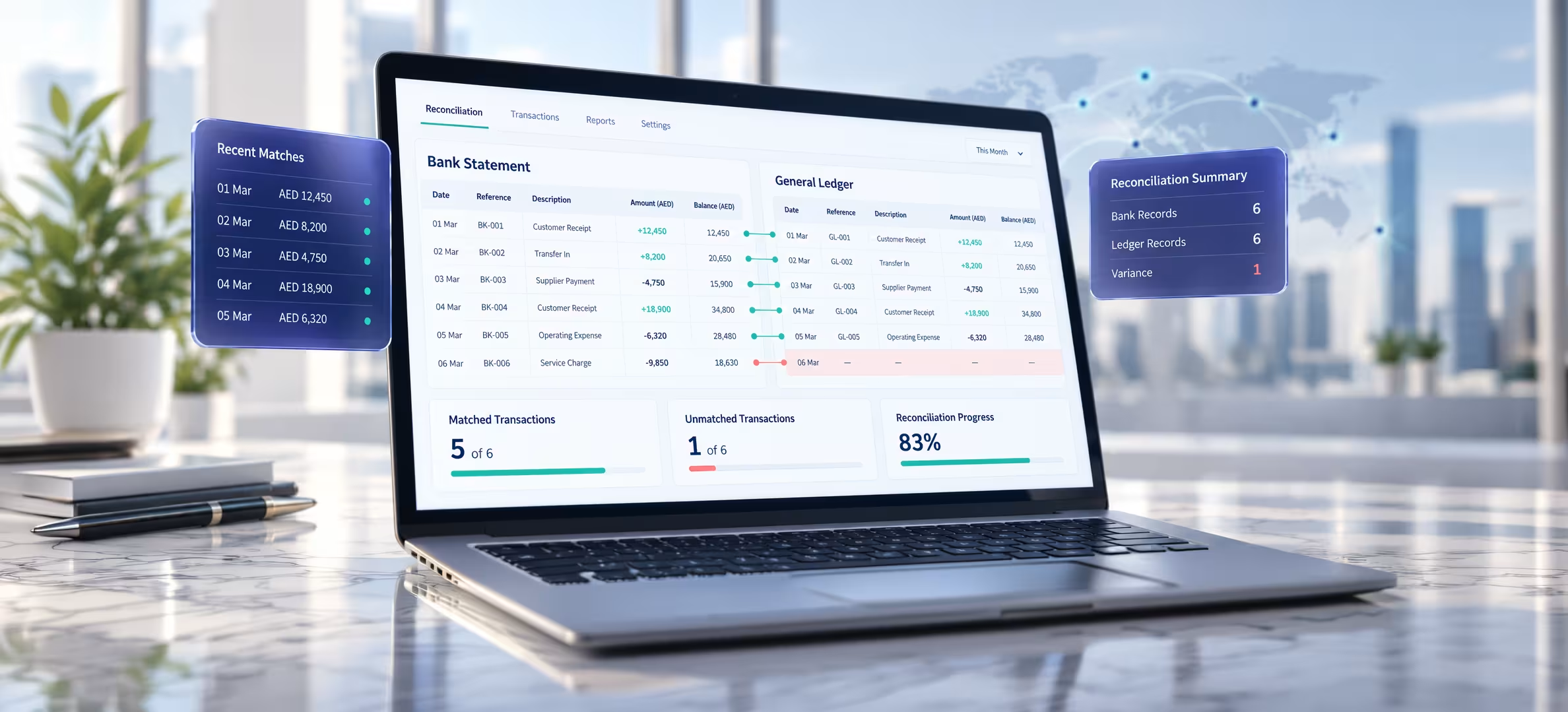
When Backlogs Keep Growing
If bank, customer, supplier, or payment gateway accounts regularly carry unreconciled transactions, an outsourced team can provide dedicated capacity to clear the backlog and establish a recurring reconciliation schedule.
When Month-End Close Takes Too Long
Businesses that repeatedly delay month-end reporting because accountants are still matching transactions can outsource recurring reconciliation work. This allows the internal team to start each close with cleaner and more complete ledgers.
When Transaction Volumes Increase
Business growth often brings more bank transactions, payment gateways, suppliers, customers, and accounting entries. Outsourcing can provide additional reconciliation capacity without requiring UAE businesses to immediately expand their internal finance team.
When the Business Uses Multiple Bank or Payment Accounts
Managing several bank accounts, currencies, POS systems, or payment platforms increases the number of records that need to be matched. An outsourced team can reconcile these accounts systematically under a defined schedule.
When Finance Staff Spend Too Much Time on Reconciliation
If internal employees are spending a significant portion of their time matching transactions and investigating routine differences, then a business is wasting its resources. Outsourcing can shift this recurring workload to a dedicated team that understands how to use accounting software, such as TallyPrime, Microsoft Dynamics, Odoo, and QuickBooks, to streamline transaction matching and routine reconciliation tasks.
What Should You Look for in an Accounts Reconciliation Outsourcing Partner?
A suitable outsourced accounts reconciliation service provider should combine reconciliation expertise, UAE accounting knowledge, strong review controls, and secure handling of financial data. For UAE businesses, the partner should also understand how reconciled accounting records support VAT, Corporate Tax, financial reporting, and audit requirements.
Experience With UAE Accounting and Tax Requirements
Look for a provider that understands UAE accounting practices and the record-keeping requirements relevant to VAT and Corporate Tax. This ensures reconciliation work supports accurate reporting and helps your business stay prepared for key UAE Corporate Tax deadlines.
Expertise Across Different Account Types
Your provider should be able to reconcile more than bank accounts. Check whether the team can handle AR, AP, credit cards, payment gateways, general ledger, intercompany, and payroll reconciliation based on your business model.
Familiarity With Your Accounting Software
The provider should be comfortable working within your existing accounting system. Ask about experience with platforms such as Odoo, Zoho Books, TallyPrime, MS Dynamics Business Central or other platforms your UAE business uses.
Defined Reconciliation and Review Procedures
Ask how the provider matches transactions, investigates discrepancies, records adjustments, and reviews completed reconciliations. A documented process reduces dependence on individual judgement and creates consistency across accounting periods.
Clear Exception Reporting
A good provider should not simply mark accounts as reconciled. They should identify unresolved transactions, unusual balances, recurring discrepancies, and items requiring management attention, then report these clearly to your finance team.
Strong Data Security Controls
Reconciliation involves access to sensitive financial information. Assess the provider’s security controls for access permissions, multi-factor authentication, encryption, confidentiality, and monitoring before granting access to work on your systems.
Scalable Reconciliation Support
Choose a provider that can handle changes in transaction volumes, new bank accounts, additional entities, or expansion into new payment channels. This prevents the reconciliation process from becoming a bottleneck as your UAE business grows.
Keep Your Accounts Accurate and Ready for Growth with Expert Support
Accounts reconciliation outsourcing can help UAE businesses maintain cleaner ledgers, resolve discrepancies sooner, and reduce the reconciliation workload on internal finance teams. More importantly, consistent reconciliation gives businesses stronger financial records to support VAT reporting, Corporate Tax requirements, and month-end reporting.
At Whiz Consulting, we provide outsourced accounts reconciliation support tailored to your existing finance setup. Our team can handle bank, credit card, AR, AP, payment gateway, general ledger, and other account reconciliations, while documenting exceptions and keeping your finance team informed of items requiring attention.

Get customized plan that supports your growth

Have questions in mind? Find answers here...
UAE businesses should reconcile bank and payment accounts regularly, with monthly account reconciliation being a common practice for many businesses. High-volume businesses may benefit from weekly or more frequent reconciliation to identify discrepancies sooner.
Consider outsourcing account reconciliations when backlogs grow, month-end closes are delayed, transaction volumes increase, or internal accountants lack capacity for timely account reviews.
No. An outsourced team can handle recurring reconciliation work, acting as an extension of your internal finance staff.
Yes, outsourcing account reconciliation can be safe when you choose a reputable provider, restrict system access, use strong data security controls, and maintain clear separation of duties.
Bank reconciliation compares bank records with the ledger, while account reconciliation covers broader accounts, including AR, AP, credit cards, payroll, and payment platforms.
Thousands of business owners trust Whiz to manage their account
Let us take care of your books and make this financial year a good one.