- English
- Arabic

In This Blog Post
Share This Article
- Published: Jul 13, 2026
- Last Updated: Sep 5, 2026
- 🔊 Listen
TL;DR
- UAE mandates e-invoicing from January 2027; businesses should prepare during the pilot phase starting July 2026.
- Choose software supporting PINT-AE, ERP integration, and Accredited Service Providers (ASPs) for compliance.
- Leading e-invoicing software includes ClearTax, Pemo, Wafeq, Zoho Books, TallyPrime, Sovos, Odoo, QuickBooks, Refrens, and Xero.
- Early implementation reduces compliance risks, simplifies ERP integration, and improves invoicing efficiency through automation.
The best e-invoicing software in UAE in 2026 is one that complies with the UAE’s upcoming e-invoicing framework, supports the PINT-AE network, connects with an FTA-Accredited Service Provider (ASP), and is ready for the phased implementation beginning in 2026. Some of the top e-invoicing software for UAE businesses in 2026 are ClearTax, Pemo, Wafeq, TallyPrime, Zoho Books, Sovos, and Odoo.
This blog explains everything UAE businesses need to know before selecting an e-invoicing solution. You’ll learn how the UAE’s e-invoicing model works, the key implementation deadlines for 2026 and 2027, and the essential features to look for when comparing the leading UAE e-invoicing providers.

Simplify UAE E-Invoicing
Prepare Early & Avoid Compliance Risks with Experts
What is E-Invoicing in the UAE?
E-invoicing in the UAE is a government-led initiative that enables businesses to exchange invoice data electronically in a structured, standardised format through Accredited Service Providers instead of relying on paper invoices, PDFs, or scanned documents.
Unlike a PDF invoice sent via email, an e-invoice under the UAE framework is generated, transmitted, received, and processed electronically using structured data.
The UAE Ministry of Finance (MoF) is introducing mandatory e-invoicing to establish a standardised invoicing framework. The initiative is designed to:
- Standardise invoice exchange across businesses operating in the UAE
- Improve VAT reporting accuracy through structured invoice data
- Reduce manual processing errors and administrative costs
- Enable faster invoice processing and reconciliation
- Strengthen transparency and tax compliance
When Will E-Invoicing Become Mandatory in the UAE?
According to the Ministry of Finance, the implementation begins with a pilot phase on 1 July 2026, followed by the first mandatory go-live phase on 1 January 2027.
| Milestone | What It Means for Businesses |
|---|---|
| 1 July 2026 | The UAE launches the pilot phase of its e-invoicing program, allowing businesses to test the framework, integrations, and invoice exchange process. |
| 1 January 2027 | Businesses included in this phase must issue and receive invoices in accordance with the UAE’s e-invoicing framework through ASPs. |
| Future phases | The Ministry of Finance will progressively expand the scope of mandatory e-invoicing to additional businesses and transaction types through subsequent implementation waves. |
Which are the Best E-Invoicing Applications in the UAE in 2026?
The best e-invoicing software in UAE in 2026 is one that aligns with the Ministry of Finance’s e-invoicing framework, supports the PINT-AE specification, and integrates seamlessly with your existing accounting or ERP system.
Below are some of the leading UAE e-invoicing providers that businesses should consider for 2026.
1. ClearTax
ClearTax is a strong choice for businesses seeking the best e-invoicing software in the UAE in 2026. It supports ERP integration with Microsoft Dynamics 365 Business Central, SAP, Oracle, and other systems while preparing organisations for PINT-AE, and FTA Accredited Service Provider (ASP) requirements. ClearTax is ISO 27001 and SOC 2 certified, while also adhering to GDPR compliance.
2. Pemo
Pemo is an expense automation platform designed for growing businesses in the UAE. It simplifies expense tracking, invoice management, and corporate card reconciliation while integrating with popular accounting systems, such as MS Dynamics, Odoo, QuickBooks, SAP, and Zoho Books. As the UAE transitions to mandatory e-invoicing, businesses using Pemo can leverage its automation capabilities alongside compliant accounting and ERP solutions to streamline financial workflows.
3. Wafeq
Wafeq offers VAT-compliant invoicing, accounting, financial reporting, and payroll while supporting UAE tax requirements. Moreover, Wafeq is Peppol Access Point certified as well as SOC 2, ISO 27001, and ISO 22301 compliant e-invoicing solution provider. By connecting seamlessly with Stripe, Wio, Baguna, Kema, and other integrations, Wafeq is well positioned for businesses preparing for the UAE’s e-invoicing framework.
4. Sovos
Sovos delivers enterprise-grade tax compliance and e-invoicing solutions for organisations operating across multiple jurisdictions. Its platform integrates with leading ERP systems such as SAP, Oracle, Odoo, and Microsoft Dynamics while supporting Peppol connectivity and automated compliance processes, making it a strong choice for enterprises preparing for the UAE’s e-invoicing rollout.
5. Zoho Books
Zoho Books is a cloud accounting solution that helps small and medium-sized businesses automate invoicing, accounting, inventory, and tax management. Its extensive integrations and automation features make it a practical choice for businesses preparing for UAE e-invoicing while continuing to manage their accounting operations from a single platform.
6. TallyPrime
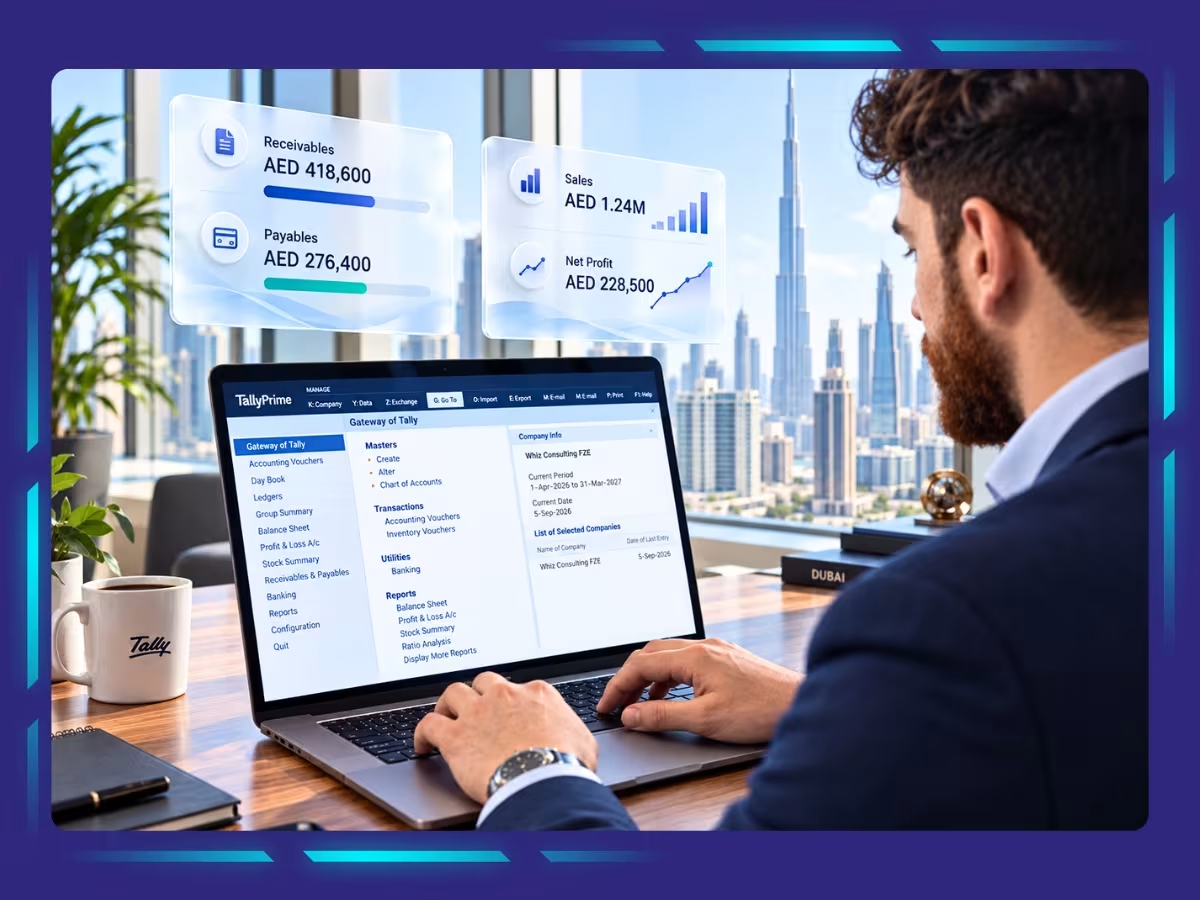
TallyPrime is widely used by businesses for accounting, inventory management, and financial reporting. With support for VAT compliance and customisable invoicing, it remains a popular solution for businesses that want to prepare their accounting systems for future UAE e-invoicing requirements through compatible integrations.
7. Odoo
Odoo is an all-in-one ERP platform that combines accounting, invoicing, inventory, CRM, and business management into a single system. Its modular architecture allows businesses to customise workflows while integrating accounting and invoicing processes with other operational functions. Odoo’s flexibility makes it a popular choice for organisations preparing for the UAE’s evolving e-invoicing requirements.
8. QuickBooks
QuickBooks is one of the world’s most widely used cloud accounting platforms for small businesses. It offers invoicing, expense tracking, VAT management, inventory, and financial reporting while integrating with hundreds of third-party business applications. Businesses in the UAE can use QuickBooks alongside ASPs to prepare for the country’s upcoming e-invoicing requirements.
9. Refrens
Refrens is a cloud-based invoicing and business management platform designed for freelancers, agencies, consultants, and small businesses. It enables users to create professional invoices, quotations, purchase orders, expense records, and financial reports while supporting VAT-compliant invoicing for multiple regions. As the UAE transitions to mandatory e-invoicing, businesses using Refrens can integrate with compliant e-invoicing solutions and Accredited Service Providers to meet PINT AE requirements.
10. Xero
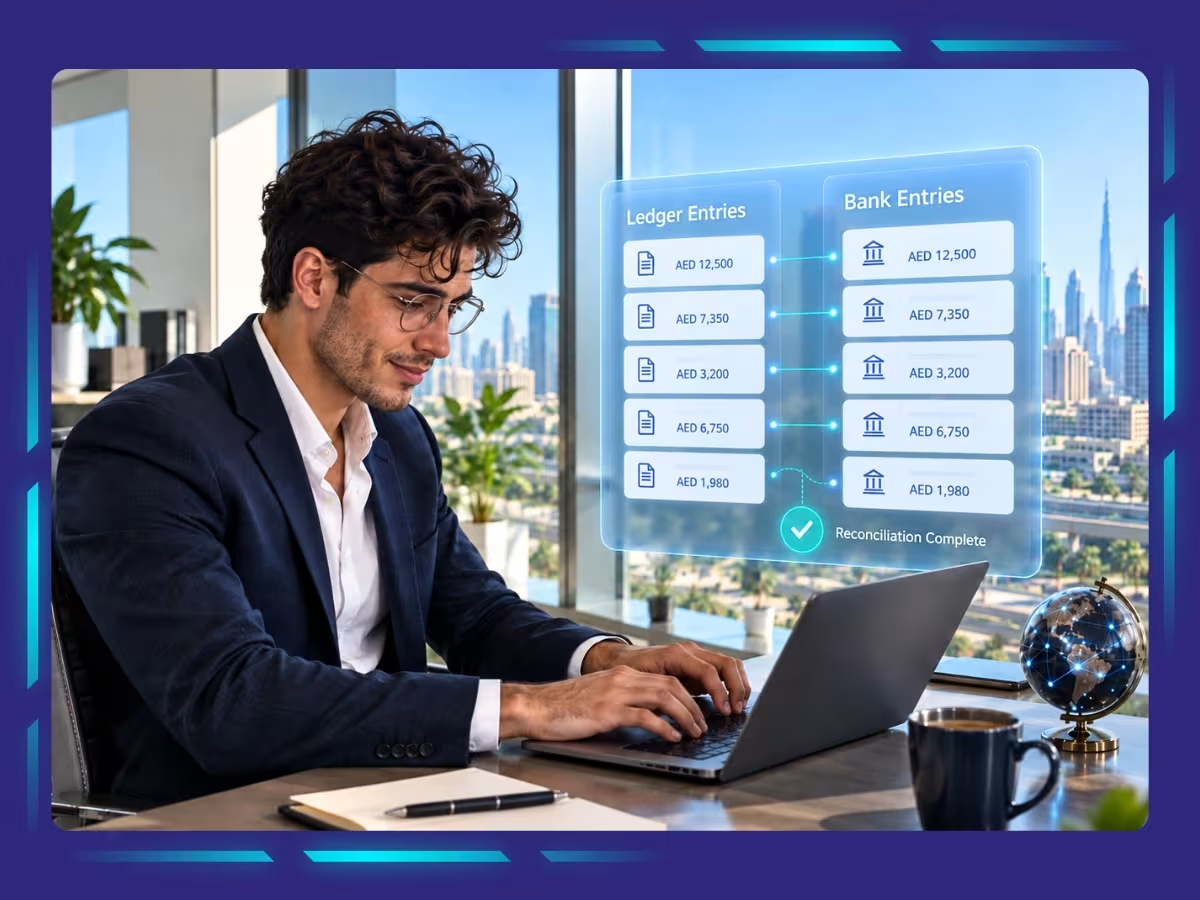
Xero is a cloud-based accounting platform that helps businesses manage invoicing, bank reconciliation, payroll, inventory, and financial reporting from a single dashboard. Its extensive ecosystem of third-party integrations makes it a flexible solution for businesses preparing for UAE e-invoicing, especially when paired with compliant e-invoicing providers and accredited service partners.
Comparison of Top E-Invoicing Software in UAE
The best e-invoicing software in the UAE in 2026 includes ClearTax, Pemo, Wafeq, Zoho Books, TallyPrime, Sovos, and Odoo. Each solution offers different strengths, from tax compliance and ERP integration to accounting automation and business management.
| Provider | Best For | ERP Integration |
|---|---|---|
| ClearTax | Businesses requiring tax compliance and e-invoicing | SAP, Oracle, Microsoft Dynamics 365, TallyPrime, Zoho Books |
| Pemo | SMEs looking for spend management and invoice automation | Microsoft Dynamics, Odoo, QuickBooks, SAP, Zoho Books |
| Wafeq | SMEs and growing businesses | Stripe, Wio, Baguna, Kema, and other business integrations |
| Zoho Books | Small and medium-sized businesses | Zoho ecosystem and third-party integrations |
| TallyPrime | Growing businesses | Tally ecosystem and compatible third-party integrations |
| Sovos | Enterprise tax compliance and automation | SAP, Oracle, Microsoft Dynamics, Odoo |
| Odoo | Businesses looking for an integrated ERP solution | Native Odoo ERP modules |
| QuickBooks | Small businesses and startups | Third-party ERP and business apps |
| Refrens | Freelancers, agencies, SMEs, and service-based businesses | Accounting and business software integrations |
| Xero | SMEs with cloud accounting needs | 1,000+ business app integrations |
What Should You Compare Before Choosing a Provider?
Rather than selecting an e-invoicing software based on price alone, evaluate each platform against these critical factors:
1. UAE Compliance Readiness
The provider should support the UAE’s PINT-AE specifications and be prepared for the Ministry of Finance’s phased rollout. Compliance updates should be delivered automatically as regulations evolve.
2. Accredited Service Provider (ASP) Capability
Since invoice exchange will take place through Accredited Service Providers, confirm whether the vendor:
- Is an accredited ASP
- Partners with an accredited ASP
- Has publicly announced its UAE accreditation roadmap
3. ERP Integration
The best solutions integrate with existing business systems to eliminate duplicate data entry. Look for native or API-based integrations with:
- Microsoft Dynamics 365 Business Central
- SAP
- Oracle
- Odoo
- Zoho Books
- QuickBooks
4. Scalability
Your invoicing requirements will grow as your business expands. Choose software that can handle increasing transaction volumes, multiple legal entities, and cross-border operations without requiring a complete system replacement.
5. Security and Data Protection
Since invoices contain sensitive financial information, ensure the provider offers:
- Secure cloud infrastructure
- Data encryption
- Role-based access controls
- Comprehensive audit trails
- Compliance with internationally recognised security standards
Get Ready for UAE E-Invoicing with the Right Experts
Choosing the best e-invoicing software in the UAE in 2026 is about building a future-ready finance function. As the UAE transitions to a PINT AE-based e-invoicing framework through FTA Accredited Service Providers (ASPs), businesses that prepare early will benefit from smoother compliance, fewer manual processes, and improved financial visibility.
The right solution should support PINT-AE, integrate seamlessly with your ERP, automate invoice validation and exchange, and adapt to future regulatory changes.
At Whiz Consulting, we help businesses simplify their finance operations with intelligent AP automation and ERP-integrated workflows. Whether you’re planning ERP integration, or preparing for the UAE’s mandatory rollout, our accounts payable services can help you streamline the transition with confidence.

Get customized plan that supports your growth

Have questions in mind? Find answers here...
E-invoicing’s pilot phase begins on 1 July 2026, while the first mandatory implementation phase starts on 1 January 2027 for eligible businesses.
An ASP is an approved intermediary that validates, transmits, and receives electronic invoices securely through the UAE’s Peppol-based e-invoicing network.
PINT-AE is the UAE’s implementation of the Peppol International Invoice standard that defines how electronic invoice data should be structured and exchanged.
Implementation timelines vary, but ERP integration, testing, staff training, and workflow configuration for e-invoicing implementation often require several weeks or months.
While not mandatory, ERP integration automates invoice exchange, reduces manual work, improves accuracy, and simplifies compliance.
Thousands of business owners trust Whiz to manage their account
Let us take care of your books and make this financial year a good one.